Daily Protein Calculator
Discover how much protein you need for your goals
Your result shows up here
Fill in the fields above. It recalculates as you type.
Take your results to the next level
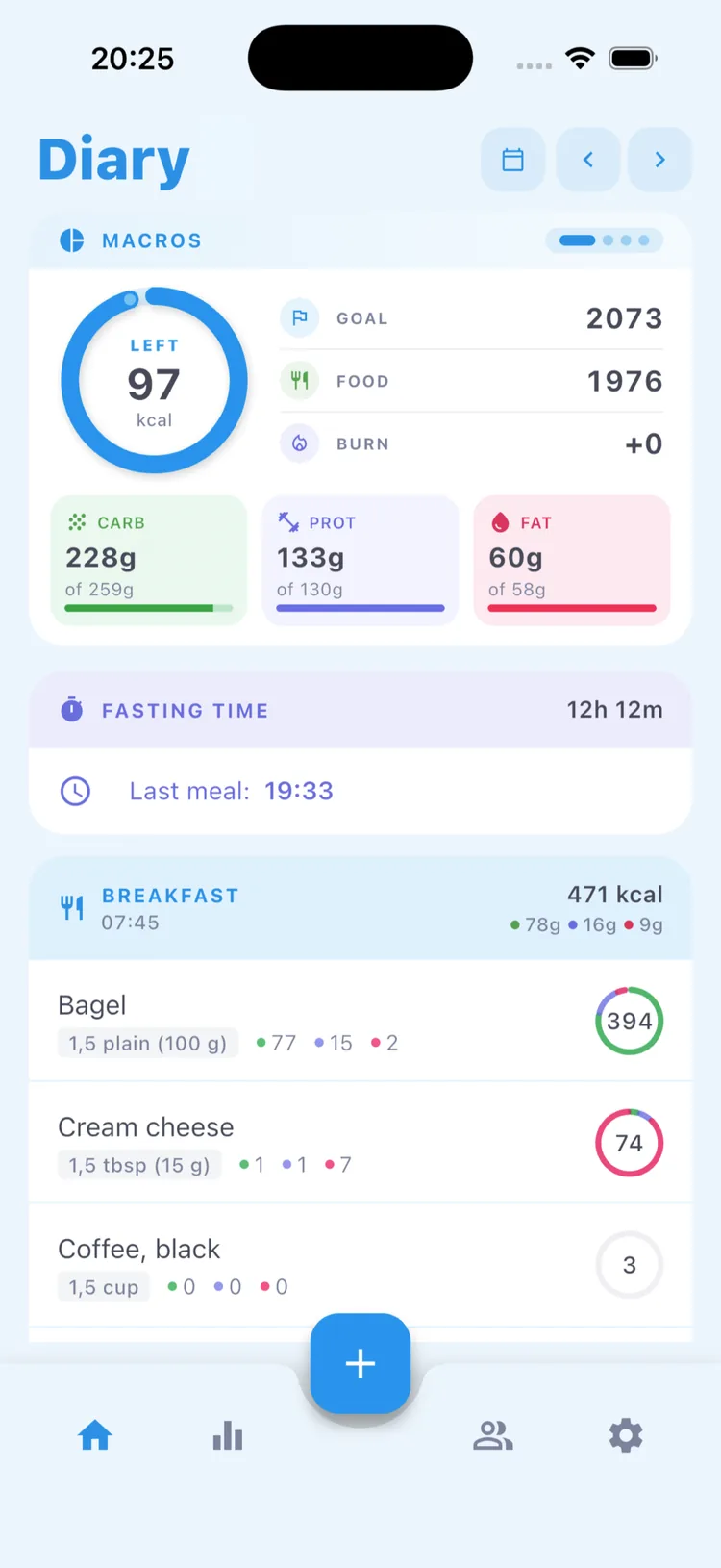
Track your progress, log your workouts, and get personalized AI plans — all in your pocket.


- Free to start
- +50k active users
- Personalized AI
Why is Protein important?
Complete Protein Guide
Your daily protein needs vary according to your physical activity level:
For sedentary people
For regular exercisers
For athletes in intense training
* Some athletes and people in specific situations may benefit from higher protein values, reaching up to 2.4-2.6g/kg in particular cases.
Protein for Muscle Gain
To optimize muscle gain, a protein intake of 1.6-2.2g of protein per kg of body weight is recommended. Athletes in a bulking phase may benefit from the upper end of this range.
Tip: Split your protein intake into 4-6 meals throughout the day for better absorption.
Protein for Fat Loss
During weight loss, a higher protein intake (2.0-2.4g/kg) helps preserve muscle mass while in a caloric deficit.
Tip: Prioritize lean proteins such as chicken, fish, and egg whites during cutting.
Protein for Adults 50+
People over 50 may need more protein (1.5-2.0g/kg) to combat the natural loss of muscle mass associated with aging.
Tip: Combine protein intake with resistance exercises for best results.
How to interpret this result?
This recommendation serves as an ideal starting point. You can:
- Distribute the total amount across 4-6 meals throughout the day
- Consume a larger portion (20-30g) after training to optimize recovery
- Adjust upward if you feel more hungry or have difficulty recovering from workouts
- Adjust downward if you have difficulty reaching this amount
Sources and Evidence
- 01Examine.com - Meta-analysis of protein studies
- 02ISSN (International Society of Sports Nutrition) - Official position
- 03Recent meta-analyses on protein intake and body composition
Benefits of Adequate Protein
Muscle Growth
Essential for protein synthesis and muscle hypertrophy after training.
Boosted Metabolism
Protein has a higher thermic effect, burning more calories during digestion.
Greater Satiety
Reduces hunger and cravings, facilitating caloric control and weight loss.
Faster Recovery
Accelerates muscle repair and reduces post-workout soreness (DOMS).
Bone Health
Adequate protein helps maintain bone density.
Muscle Preservation
Prevents lean mass loss during caloric deficit.
Tips for Reaching Your Protein Goal
Include a protein source in every meal
Consider whey protein as supplementation
Prioritize lean protein sources
Distribute intake throughout the day
Continue Optimizing Your Nutrition
Discover other tools to improve your diet
More calculators
Free tools that work together.